
Knitting vs Crochet: Which Is Easier, Faster and Better for You?
Knitting vs crochet compared: which is easier to learn, faster, uses less yarn, and suits blankets, sweaters and gifts, plus a 20-minute crochet test swatch.
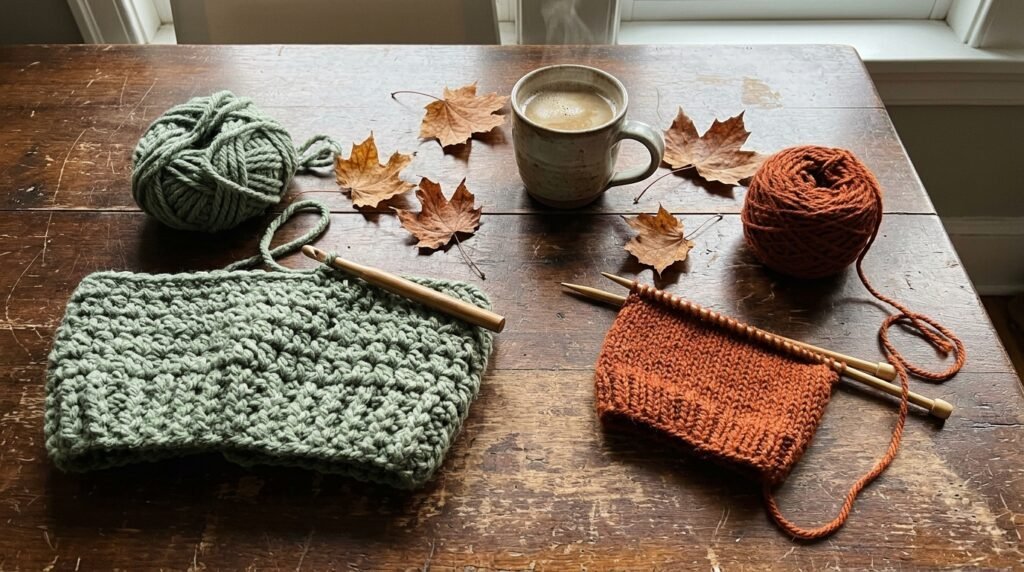
You’re standing in the yarn aisle with a cart full of good intentions. One wall has crochet hooks, the other has knitting needles, and every friend you ask swears their craft is the “easy one.” So which should you actually pick up this winter?
This guide settles the knitting vs crochet question the practical way. We’ll compare how each craft works, which is easier to learn, which is faster, which eats more yarn, what each is best at, and what it costs to start. By the end, you’ll know which one fits the projects you want to make (and why plenty of makers end up doing both).
Quick answer: Knitting uses two needles and keeps many live stitches on the needle at once, making a smooth, stretchy, drapey fabric. Crochet uses one hook and works one live loop at a time, making a thicker, sturdier, more textured fabric. Most beginners find crochet faster to learn and easier to fix, and it grows faster for blankets and home decor. Knitting usually uses less yarn and shines for drapey garments like sweaters and socks.
Key Takeaways
- Tools: knitting = two needles (or one circular needle); crochet = one hook.
- Live stitches: knitting holds a whole row of live stitches; crochet has just one loop on the hook, so it’s harder to “lose” your work.
- Fabric: knitting is thinner, stretchier and drapier; crochet is thicker, firmer and more textured.
- Speed: crochet usually builds fabric faster because the stitches are taller.
- Yarn: crochet generally uses more yarn for the same size piece, so budget a little extra.
- Best for beginners: crochet if you want quick wins and home projects; knitting if your dream project is a fitted sweater or socks.
Table of Contents
- What’s the Difference Between Knitting and Crochet?
- Knitting vs Crochet at a Glance (Comparison Table)
- Is It Easier to Knit or Crochet?
- Which Is Faster, Crochet or Knitting?
- Does Crochet Use More Yarn Than Knitting?
- Is It Easier to Knit or Crochet a Blanket?
- Which Projects Suit Each Craft Best?
- Cost and Supplies to Get Started
- Which Is Easier on Your Hands?
- How to Choose: A 5-Question Checklist
- Try Crochet Tonight: A 20-Minute Test Swatch
- Common Beginner Mistakes in Both Crafts
- FAQ
- Final Thoughts
What’s the Difference Between Knitting and Crochet?
Both crafts turn a single strand of yarn into fabric by pulling loops through loops. The big difference is how many loops are “live” at once.
Knitting uses two pointed needles. You cast on a full row of loops, then move them from one needle to the other, one by one, building row after row. Every stitch in the current row stays live on the needle until you work it. Drop one, and it can run down the fabric like a ladder in a pair of tights.
Crochet uses a single hook. You work into the stitches of the previous row, and when each stitch is finished, only one loop stays on your hook. Everything else is locked in place. Put your work down mid-row and nothing unravels.
That one structural difference explains almost everything else in this guide: the look of the fabric, the speed, the yarn use, and why mistakes feel so different in each craft.
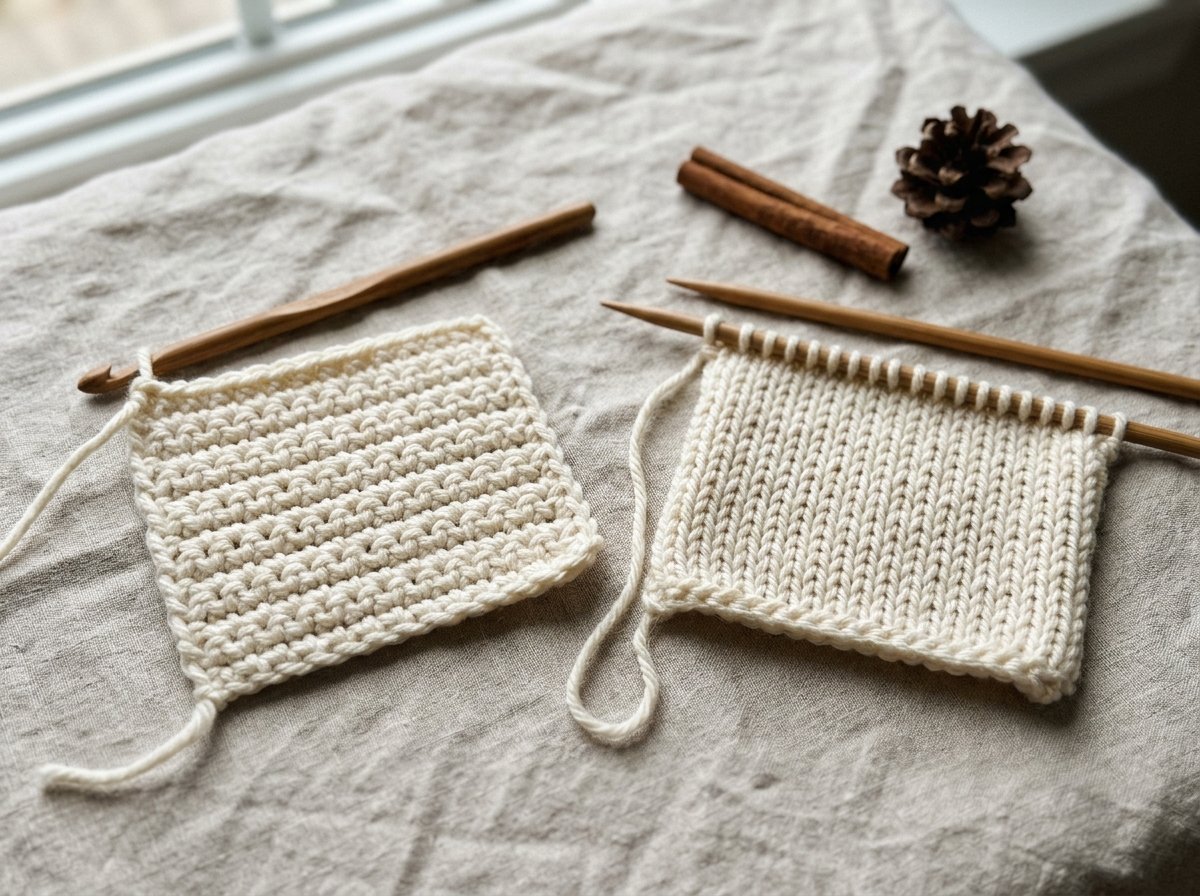
How to tell knitting and crochet apart at a glance
- Knitting looks like neat columns of little V shapes on the front (stockinette) and tiny bumps on the back.
- Crochet looks like rows of small knots, posts and bumps, with more visible texture and little gaps between taller stitches.
- Stretch a corner: knitting gives and springs back; crochet feels firmer and holds its shape.
Knitting vs Crochet at a Glance (Comparison Table)
| Feature | Knitting | Crochet |
|---|---|---|
| Main tool | 2 needles (or 1 circular) | 1 hook |
| Live stitches | A whole row | Usually 1 loop |
| Fabric | Thin, stretchy, drapey | Thicker, firmer, textured |
| Speed | Slower per inch | Faster per inch |
| Yarn use | Less for the same size | More for the same size |
| Fixing mistakes | Trickier (dropped stitches can run) | Easier (pull back to the error) |
| Best at | Sweaters, socks, fitted garments | Blankets, amigurumi, bags, home decor |
| Machine version? | Yes (most store-bought sweaters) | No, it’s always handmade |
Is It Easier to Knit or Crochet?
For most adult beginners, crochet is easier to start. That’s not a rule of the universe; it’s what tends to happen when people sit down with a tool for the first time. Here’s why:
- One tool, one loop. You only manage a single hook, and there’s only one active loop to keep track of.
- Mistakes are easy to undo. Pull the hook out and tug the yarn, and the stitches unravel back to your mistake. Pop the loop back on the hook and keep going. In knitting, you have to pick up live stitches carefully so they don’t twist or drop.
- Freedom of direction. Crochet works happily in rows, in rounds, or in any shape you like. That’s why tiny 3D toys are almost always crocheted.
Knitting has a learning curve in the first few hours, mostly in coordinating two needles and keeping an even tension across a full row of stitches. Once that clicks, though, many knitters find the motion very rhythmic and relaxing. And honestly, the craft you learn first usually feels like the easier one forever after.
If you want to try crochet, our step-by-step first crochet lesson walks you through holding the hook, chaining and your first row.
Which Is Faster, Crochet or Knitting?
Crochet is usually faster at building fabric. The reason is simple geometry: a single crochet is about as tall as a knit stitch, but a double crochet or treble crochet is two to three times taller. Each stitch covers more area, so a crocheted panel grows quickly.
That said, speed depends heavily on the stitch you choose and how practiced you are. A few things to know:
- Tall crochet stitches = fastest fabric. Double crochet blankets fly off the hook.
- Dense crochet stitches are slower. Single crochet or textured stitches like the moss stitch take longer per inch than people expect.
- Experienced knitters can be very fast. Continental-style knitters working plain stockinette can keep up with many crocheters.
Curious about real project timelines? See our breakdown of how long it takes to crochet a blanket, with time estimates by size and stitch.
Does Crochet Use More Yarn Than Knitting?
Generally, yes. Crochet stitches are built from more wraps and loops, and the fabric is thicker, so a crocheted piece typically needs more yardage than a knitted piece of the same size. You’ll often see it estimated at roughly a quarter to a third more, but the real number swings a lot with the stitch pattern, hook size and your tension.
A few practical tips:
- Lacy, open crochet stitches (shells, mesh, V-stitches) use noticeably less yarn than solid stitches.
- Textured knitting (cables, brioche) can use as much yarn as crochet, or more.
- Always buy an extra skein from the same dye lot for crochet projects. It’s cheaper than hunting for a matching color later.
Planning a big project? Our crochet blanket yardage chart gives yarn amounts by blanket size and yarn weight.
Is It Easier to Knit or Crochet a Blanket?
For a first blanket, crochet is usually the easier and faster choice. Here’s what tips the balance:
- No giant needle full of stitches. A knitted throw can mean 150+ live stitches crammed onto a long circular needle, and the whole weight of the blanket sits on it. With crochet, you only ever hold one loop.
- Modular options. Crochet lets you make small pieces, like granny squares, and join them later. Easy to carry, easy to fix, satisfying to finish.
- Flat, sturdy fabric. Crochet stitches don’t curl at the edges the way stockinette knitting does, so the blanket lies flat with less fuss.
Knitted blankets do have their charm: they’re softer, lighter and drape beautifully over a sofa. If you love that squishy, drapey look, go for it, but pick a stitch like garter or seed stitch that won’t curl.
Not sure which stitch to choose? Compare textures and effort in our guide to crochet stitches for your first blanket.
Which Projects Suit Each Craft Best?
You can make almost anything with either craft. But each has projects where it really shines.
Choose knitting for
- Sweaters and cardigans that need to drape and move with you.
- Socks, where thin, stretchy fabric matters for fit inside shoes.
- Ribbed hats and cuffs that hug and spring back.
- Lightweight scarves with a soft, fluid feel.
Choose crochet for
- Blankets and throws, especially granny squares and textured stitches.
- Amigurumi (stuffed toys), which need tight, firm, 3D shaping. Start with our amigurumi for beginners guide.
- Bags, baskets and home decor that need structure.
- Lace, doilies and appliqués like flowers and snowflakes.
- Quick gifts: dishcloths, ear warmers, ornaments and slippers. Browse our easy crochet projects for beginners for ideas.
Holiday makers, take note: with Christmas a few weeks away, crochet’s speed is a real advantage. A hat, a set of ornaments or a cozy pair of slippers can be done in an evening or two.
Cost and Supplies to Get Started
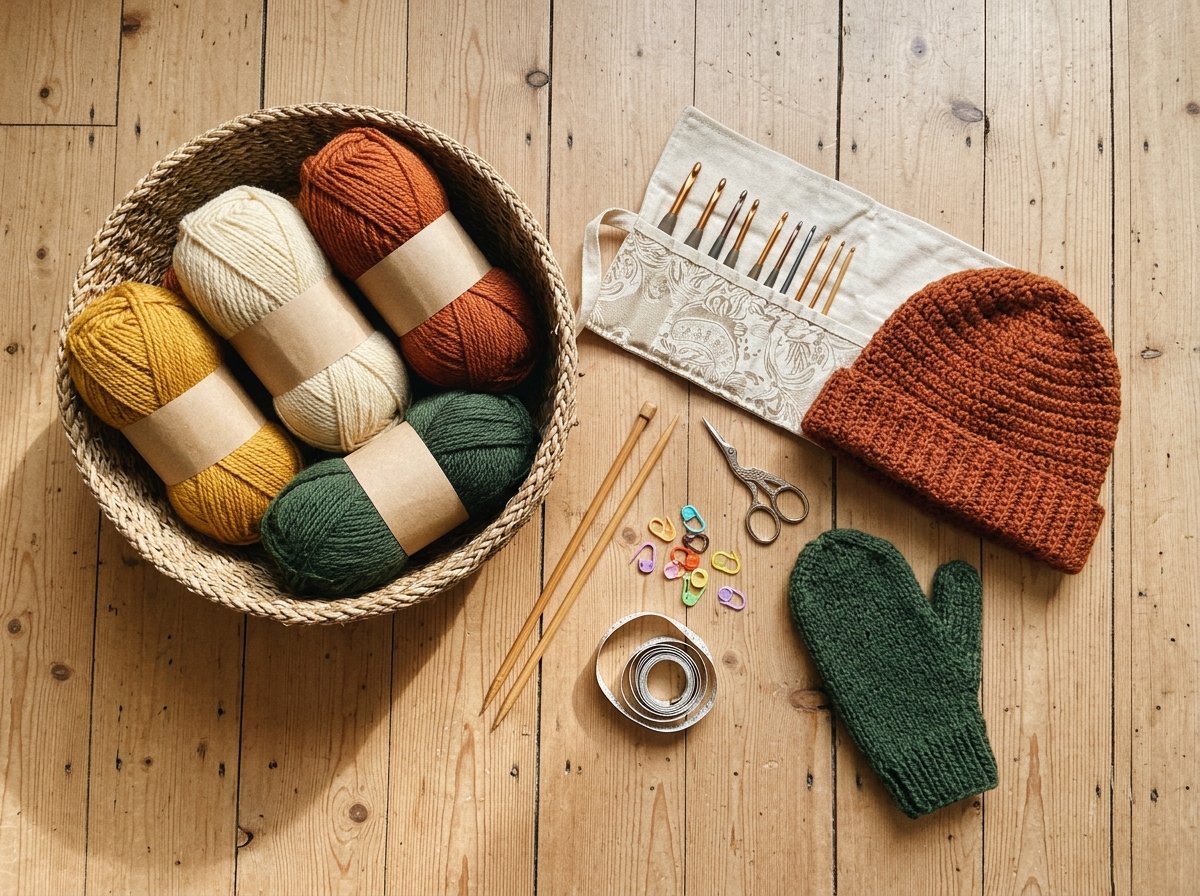
Both crafts are inexpensive to try. Here’s a simple starter kit for each:
Crochet starter kit
- One 5 mm (US H-8) or 5.5 mm (US I-9) hook
- One skein of smooth, light-colored worsted weight (#4) yarn
- Scissors and a blunt yarn needle
- A few stitch markers (optional, but very helpful)
Knitting starter kit
- One pair of US 8 (5 mm) straight needles, bamboo or wood for grip
- One skein of smooth, light-colored worsted weight (#4) yarn
- Scissors and a blunt yarn needle
- Stitch markers and point protectors
Hooks are typically a bit cheaper than needles, and you’ll eventually want several sizes of each. Knitting can also need extra sizes and lengths (straights, circulars, double-pointed needles), so the tool collection tends to grow faster. On the flip side, crochet’s higher yarn use can make big projects cost more over time.
Which Is Easier on Your Hands?
People ask this a lot, especially those with stiff or sore hands or arthritis. There’s no one answer that fits everyone, because the two crafts stress your hands differently:
- Crochet puts most of the work on one hand and wrist, with a repeated twisting and hooking motion. An ergonomic hook with a thick, soft handle can make a big difference.
- Knitting spreads the work across both hands, but holding two needles and a full row of stitches can tire your grip. Lightweight bamboo or circular needles take the weight off.
Whichever you choose: keep sessions short, take breaks every 20 to 30 minutes, stretch your fingers and wrists, and use bigger tools with thicker yarn, which need less fine gripping. If you have a medical condition affecting your hands, ask your doctor or a hand therapist which motions are best for you.
How to Choose: A 5-Question Checklist
- What do you want to make first? Sweater or socks → knitting. Blanket, toy, bag or decor → crochet.
- Do you want results fast? If seeing a finished object this weekend keeps you motivated, start with crochet.
- How do you feel about fixing mistakes? If dropped stitches sound stressful, crochet is more forgiving.
- Do you prefer drape or structure? Soft and flowing → knitting. Firm and textured → crochet.
- Is there someone who can teach you? Learning from a friend or relative is a huge advantage. Pick the craft they know.
Still torn? Try crochet for a week. It takes very little to start, and the skills (reading yarn labels, tension, gauge) transfer straight over if you add knitting later.
Try Crochet Tonight: A 20-Minute Test Swatch
The fastest way to decide is to make something tiny. This little swatch shows you how crochet feels in your hands.
Swatch at a glance
- Skill level: Absolute beginner
- Yarn: Worsted weight (#4), about 20 yards
- Hook: 5 mm (US H-8)
- Time: about 20 minutes
- Abbreviations (US): ch = chain, sc = single crochet, hdc = half double crochet, st(s) = stitch(es)
Steps
- Make a slip knot and put it on your hook.
- Chain 16. Keep the chains loose enough that your hook slides through them easily.
- Row 1: Sc in the 2nd ch from the hook and in each ch across. [15 sc]
- Rows 2–6: Ch 1, turn. Sc in each st across. [15 sc] Count at the end of each row.
- Rows 7–12: Ch 2 (does not count as a st), turn. Hdc in each st across. [15 hdc] Notice how much faster the fabric grows with the taller stitch.
- Fasten off: cut the yarn, pull it through the last loop, and weave in the ends.
Feel the difference between the dense single crochet rows and the softer half double crochet rows. If you enjoyed it, our guides to single crochet and half double crochet are your next steps. Want abbreviations at your fingertips? Bookmark the crochet abbreviations cheat sheet.
Common Beginner Mistakes in Both Crafts
- Choosing dark or fuzzy yarn. You can’t see your stitches. Start with smooth, light-colored worsted yarn.
- Pulling too tight. Tight tension makes it hard to insert the hook or needle. Relax your grip and let the yarn flow.
- Not counting stitches. Crocheters often add or lose a stitch at the row ends; knitters drop stitches. Count every few rows.
- Starting with a huge project. A king-size blanket as project one is a recipe for a half-finished pile. Start with a dishcloth, hat or scarf.
- Skipping the gauge swatch on anything that needs to fit. A 10-minute swatch saves hours of frogging.
- Mixing up US and UK terms (crochet). A UK “double crochet” is a US single crochet. Always check which terms your pattern uses.
FAQ
Is crochet easier than knitting for beginners?
For most people, yes. Crochet uses one hook and keeps only one live loop at a time, so it’s easier to manage and much easier to fix mistakes. Knitting takes a little longer to click but is very rewarding once it does.
Which is faster, crochet or knitting?
Crochet is usually faster because its taller stitches cover more area per stitch. A double crochet blanket grows much faster than a stockinette knitted one. Very experienced knitters working simple stitches can close the gap.
Does crochet use more yarn than knitting?
Generally, yes. Crochet fabric is thicker and each stitch uses more yarn, so plan extra yardage for crochet projects. Open, lacy crochet stitches use less than solid ones.
Is it easier to knit or crochet a blanket?
Crochet is usually easier for a first blanket: you only hold one loop, you can make it in small pieces like granny squares, and the fabric lies flat without curling.
Can you learn both knitting and crochet?
Absolutely. Many makers learn one first and add the other later. Skills like reading yarn labels, managing tension and checking gauge carry over, and some projects combine both, like a knitted sweater with a crochet edging.
Is knitting or crocheting better for arthritis?
It depends on the person. Crochet works one hand harder; knitting spreads the work across both hands but involves holding two tools. Ergonomic hooks, lightweight needles, thicker yarn and frequent breaks help with either. Ask your doctor or a hand therapist for advice specific to you.
Can you use the same yarn for knitting and crochet?
Yes. Any yarn works for both crafts. The yarn label usually lists a suggested needle size and sometimes a hook size; crochet often goes up a size or two compared with knitting for the same yarn.
Can crochet be made by a machine?
No. Knitting machines exist, which is why most store-bought sweaters are knitted. True crochet has never been successfully mechanized, so every crocheted piece you see is handmade.
Final Thoughts
There’s no wrong answer in the knitting vs crochet debate, only the craft that fits what you want to make. If you dream of drapey sweaters and socks, knitting is worth the slower start. If you want cozy blankets, cute amigurumi, sturdy bags and quick holiday gifts, crochet gets you there faster and forgives your mistakes along the way.
Ready to give crochet a try? Grab a hook and a skein of worsted yarn, make the 20-minute swatch above, and see how it feels. When you’re ready for your first real project, you’ll find beginner-friendly patterns in the Yarvella pattern shop, and plenty more free tutorials right here on the blog. Happy making!
Keep making
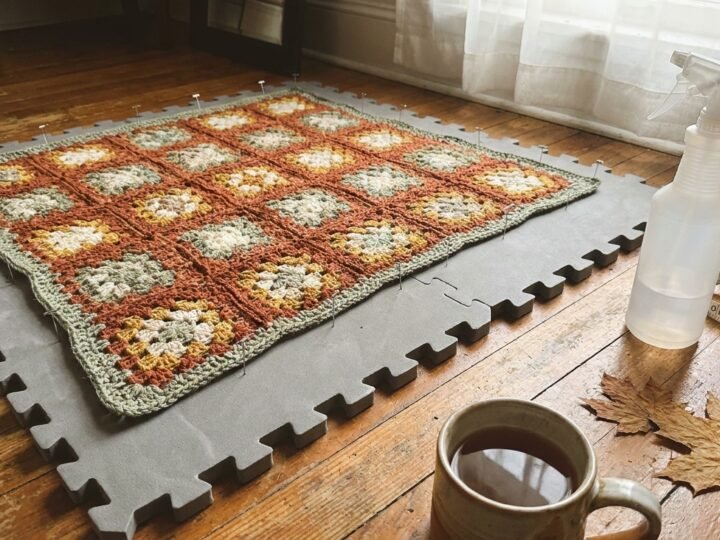
How to Block Crochet: Wet, Spray & Steam Blocking for Any Yarn
Learn how to block crochet the right way for wool, cotton and acrylic: step-by-step wet, spray and steam blocking, tools, drying times and…
Read the guide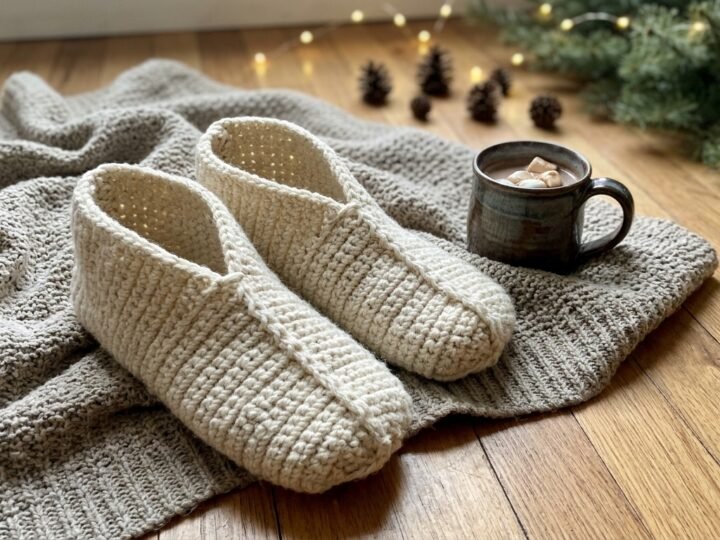
How to Crochet Slippers for Beginners: Easy Rectangle Pattern + Size Chart
Learn how to crochet slippers for beginners with an easy folded-rectangle pattern, a size chart for kids, women and men, non-slip sole tips…
Read the guide