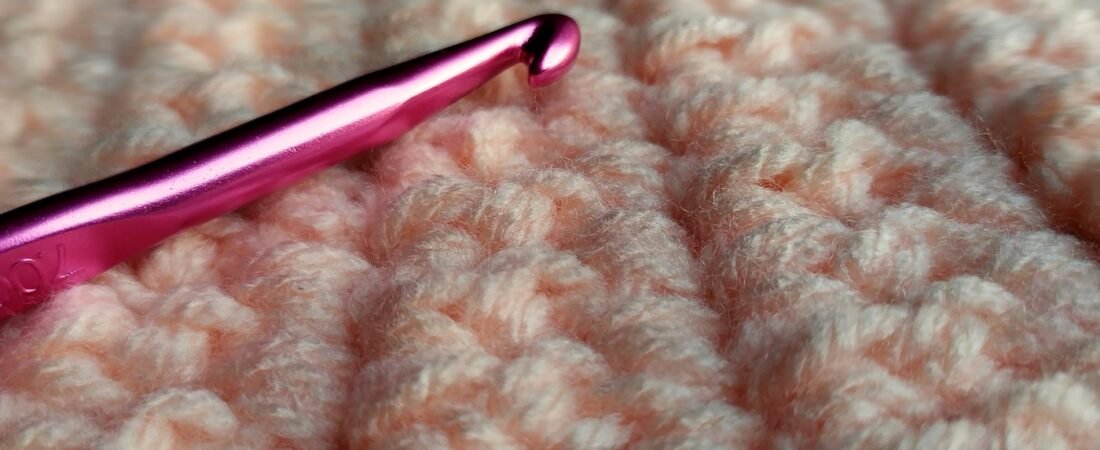
Illustrative crochet photograph by Karina L via Unsplash. This is not a photograph of a Yarvella-tested sample.
Your first crochet kit can fit in a small pouch. You do not need a collection of hooks or an ambitious blanket to begin. Start with yarn you can see clearly, a comfortable hook and a little room to practise.
Build a small, useful crochet kit
- Smooth, light-colored yarn: a medium-weight cotton or acrylic makes individual loops easier to see. Save fuzzy and very dark yarns for later.
- One hook: begin with the size recommended on your yarn label. A comfortable handle matters more than a large set.
- Two stitch markers: use these to identify the first and last stitches.
- Scissors and a blunt yarn needle: for trimming yarn and weaving in tails.
- A ruler: measure your practice swatch instead of judging its size from a photograph.
Learn three things before starting a pattern
1. Make a slip knot and a chain
Place a slip knot on the hook and adjust it so it slides easily. Wrap the working yarn over the hook and pull it through the loop to make one chain. Repeat slowly. Aim for chains that look similar in size; tight chains make the first row harder to work.
2. Recognize the top of a stitch
At the top of a completed crochet stitch, look for a small V. Most basic instructions ask you to insert your hook under both loops of that V. Working through only one loop changes the texture, so read your pattern before choosing.
3. Count every row
Mark the first and last real stitches, then count across. Counting is the quickest way to notice an accidental increase or a missed edge stitch before it becomes several rows of extra work.
A gentle first practice session
Make 13 chains. Work one single crochet into the second chain from your hook and into each remaining chain: 12 stitches. Chain one, turn, and work 12 single crochets across. The turning chain is not a stitch in this exercise. Repeat until your swatch feels comfortable to hold.
You can unravel this practice piece and reuse the yarn. Its job is to teach your hands the movement, not to become a perfect finished object.
When something looks wrong
- The hook struggles to enter: loosen your grip and remake the foundation chain more gently.
- The piece gets narrower: check whether you missed the final stitch.
- The edge gets wider: check whether you worked into the turning chain by mistake.
- Your hands ache: pause and change your grip. Do not push through discomfort.
Your next handmade moment
Follow the single crochet guide, then try our simple cotton dishcloth. A small rectangle lets you practise the same useful skills without needing to learn shaping straight away.
Our guides use US stitch names. Check a pattern’s terminology before starting: the same stitch may have a different name in a UK pattern.
Terminology reference: Craft Yarn Council.