
Crochet Stitches for Your First Blanket: Compare Texture, Drape and Effort
Choose a blanket stitch by the fabric you want, the time you can give it and the practical details that make a large project easier to finish.
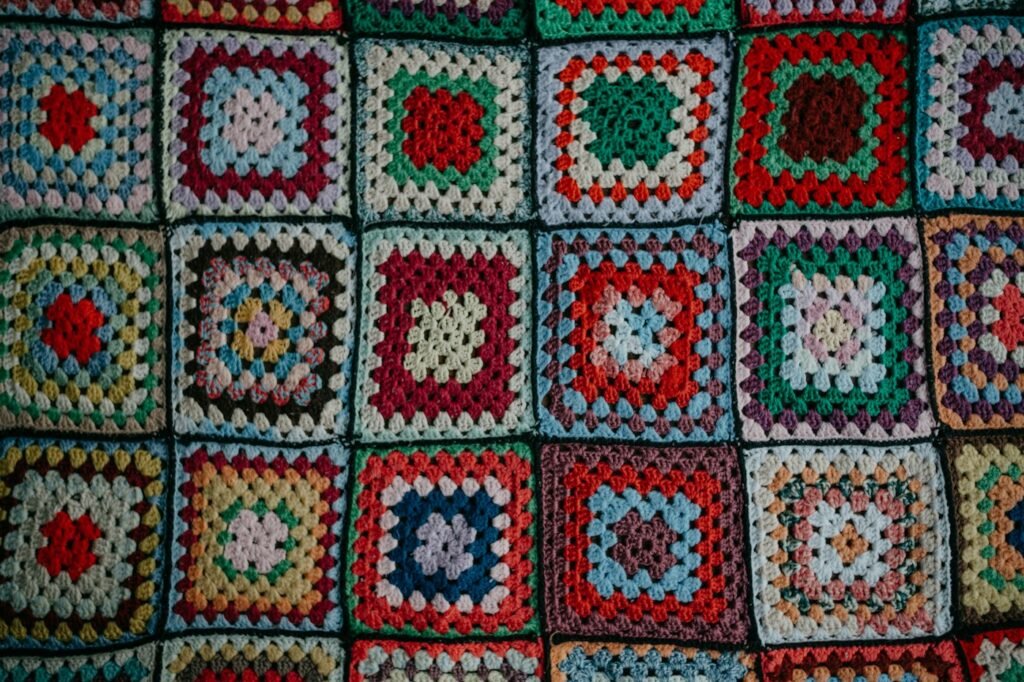
A crochet blanket begins with a small decision: what kind of fabric do you want to live with? A thick throw for a chair, a light layer for the sofa and a decorative granny-square blanket ask different things of a stitch.
Before choosing the prettiest close-up photograph, think about warmth, flexibility, washing and the amount of repetition you enjoy. Your first blanket is more likely to get finished when its stitch pattern suits both the project and your available time.
Decide what you want from the fabric
Start with an existing blanket you like using. Measure it and notice its weight. Does it fold easily? Is it warm without feeling heavy? Are there holes large enough to catch jewelry or a finger? These observations give you a practical target.
Write down three priorities. For example: easy to wash, a quiet texture and a repeat that can be memorized. Another maker might choose open texture, bright color and portable pieces. Neither list is better; it simply points toward a different construction.
Also consider how you will work. A blanket made in one piece becomes less portable as it grows. Individual squares can travel in a small bag, but they require joining and more tail management. Choose the tradeoff you are happy to repeat for several weeks.
Compare five useful approaches
| Approach | What to expect | Main beginner consideration |
|---|---|---|
| Single crochet rows | A compact, straightforward surface | Many rows and potentially firm fabric |
| Half double crochet rows | A middle-height stitch with visible texture | Recognizing the correct top loops |
| Double crochet rows | Taller stitches and a more open appearance | Consistent turning-chain treatment |
| Moss stitch rows | A small repeat of stitches and spaces | Working into spaces and keeping edge counts steady |
| Traditional granny squares | Separate motifs joined into a grid | Matching square sizes, joining and weaving in ends |
None of these is automatically the warmest, quickest or most economical. Yarn thickness and tension can change the result substantially. A small sample in your actual yarn gives a more useful answer than a general ranking.
Single crochet for a plain, steady project
If you want to concentrate on holding the yarn and keeping even edges, single crochet is a sensible starting point. One stitch in every stitch makes counting easy to understand. A solid color also lets you notice the rhythm of the rows.
The tradeoff is that a short stitch needs many rows to build height. In a tightly worked yarn, the blanket can become firm or heavy. Make a sample large enough to fold, then decide whether you enjoy the feel before committing to the entire width.
Half double crochet for an everyday texture
Half double crochet is a useful option when you want a basic repeat with more height than single crochet. Its movement is still compact: yarn over, insert, pull up a loop, then pull through three loops.
The extra strand can make stitch placement confusing at first. In a basic row pattern, use the specified top loops consistently. If you alternate between top loops and third-loop placement by accident, the texture changes across the blanket. Keep a practice sample nearby as a reference.
Double crochet when you like a more open fabric
Double crochet can create height with fewer rows than a shorter stitch at comparable gauge. That does not guarantee a quicker blanket, because the individual movement and chosen dimensions still matter.
Check the spaces between the stitches. If you want a dense fabric, your first double crochet sample may look more open than expected. Test a different hook if appropriate, or choose a different stitch instead of forcing a texture you do not like.
Read the turning-chain rule before the first row. Mark the beginning and end points so you do not add or lose a stitch each time you turn.
Moss stitch for a regular, understated repeat
Moss stitch is built from single crochet and chains. Working into the spaces can become comfortable once you recognize them, and the small repeat works well with simple stripes.
Try it in one color first. That keeps your attention on the edge placement rather than the color-change method. If you later add stripes, make a second sample that includes the intended sequence and inspect both sides.
Our moss stitch guide includes a practice exercise. Use it to understand the repeat before calculating a blanket-width foundation.
Granny squares when portability matters
Squares are a useful choice if you want to make the project in small sessions. You can complete a motif on a short break and assemble the blanket later. They also make it easy to experiment with color placement.
The finishing work is part of the project, not a small afterthought. Each additional color can introduce more tails, and every square must fit the grid. Make several squares before buying all your yarn so you can check size consistency and your preferred joining method.
Read our granny-square planning guide for a grid example, and use the basic square lesson to practise corners.
Make a sample you can trust
A few centimeters of crochet are enough to show the stitch movement, but not always enough to judge blanket fabric. Make a comfortably sized sample, work several repeats and include the edge treatment you intend to use.
Measure the central area without stretching it. Record the number of stitches or full pattern repeats across a known width, then record the number of rows across a known height. Avoid measuring only the edges, which may distort the reading.
Wash and dry the sample according to the yarn label. Measure it again once completely dry. If it grows, shrinks or changes texture, account for that before calculating the blanket. Keep the label and your notes together.
Turn measurements into a plan
Suppose your washed sample has 16 stitches across 10 cm. A plain row fabric approximately 100 cm wide would need about 160 working stitches before border adjustments. The starting-chain count depends on the stitch and its turning-chain convention, so do not simply chain 160 without checking those details.
Pattern repeats need another step. If a stitch requires a repeat multiple, round the calculated width to a compatible count and recalculate the resulting measurement. For a space-based stitch, make sure your gauge count uses the same unit as the pattern: stitches, spaces or complete repeats.
For a motif blanket, use the washed size of a square and the extra width contributed by the join. Make a two-square sample if you need a closer estimate. Decide the border width separately rather than counting it twice.
Estimate yarn from a real sample
Weigh your completed sample and compare its area with the planned blanket area. If a 20 × 20 cm sample weighs 25 g, a 100 × 140 cm rectangle has 35 times its area, giving a rough body estimate of 875 g in that same fabric.
This is an estimate, not a shopping guarantee. Borders, joining, color changes, swatch edges and tension variation affect the total. Allow a separate margin and estimate individual colors if your design uses several. Buy compatible yarn and keep the dye-lot information when color consistency matters.
Make the repetition easier to manage
Write a short project card: yarn, hook, starting count, row rule and target measurement. Add the date when you begin and photograph the sample. These details help when you return after a break.
Count regularly, especially in the first rows. Use markers at the edges and additional markers at useful intervals across a long row. If you discover a mistake, investigate it before several more rows hide its location.
Weave in ends in small batches. For squares, set a repeatable goal that includes finishing: making three squares and securing their tails is more complete than making ten and leaving every end loose.
What is the best chunky yarn for a blanket?
Choose a bulky yarn by care needs, softness, weight and stitch definition, rather than thickness alone. A smooth, plied yarn can make stitches easier to identify than a fluffy or loosely structured yarn. Compare a washed swatch for drape and shedding, and read the care label before buying enough for the whole blanket.
The Craft Yarn Council groups bulky yarn as category 5 and super bulky as category 6. These groups are starting points, not guarantees that two yarns will make the same fabric. Check meters or yards per ball as well as ball weight. Estimate the full amount from your own sample and include extra for joining, borders and a practical reserve. See the Craft Yarn Council yarn-weight reference.
Blanket questions
Should I choose thick yarn to finish faster?
Thicker yarn can build size with fewer stitches, but it can also create a heavy blanket and increase the physical effort of working. Handle a sample before deciding.
Can I mix different yarns?
You can, but compare weight, fiber behavior and care instructions first. Uneven washing behavior can distort the fabric even when the colors look good together.
Will a border fix a narrow edge?
Not reliably. A gradually narrowing body usually means stitches have been lost. Correct the row structure before using a border to finish it.
How do I choose between two samples?
Choose the fabric you enjoy handling and the repeat you can imagine doing many times. The best first blanket is a project whose working process suits you as well as its finished appearance.
Ready to finish the outer edge? See our easy crochet blanket borders guide for a flat, simple frame.
Illustrative photography: Annie Spratt via Unsplash. Original planning guide written for Yarvella Crochet.
Keep making
Easy Crochet Christmas Ornaments: 5 Free Beginner Patterns
Make 5 easy crochet Christmas ornaments: a candy cane, bauble, star, mini hat and holly, with free beginner patterns in US terms, tips…
Read the guide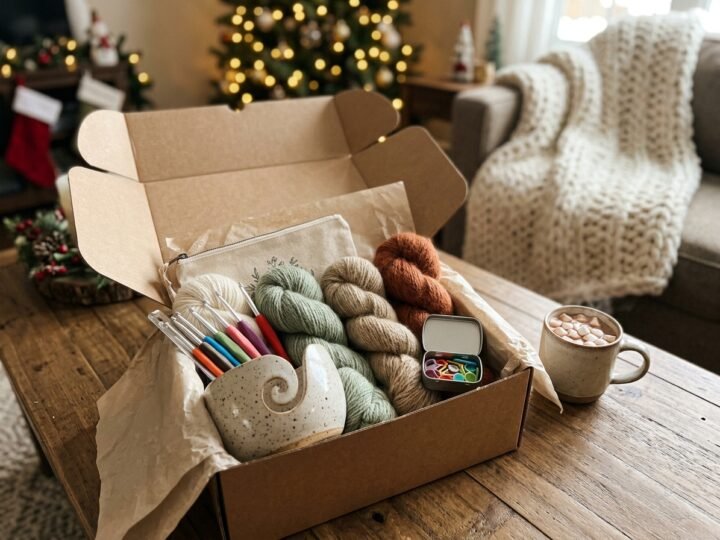
Gifts for Crocheters: 30 Ideas They’ll Actually Use (by Budget)
The best gifts for crocheters, sorted by budget: ergonomic hooks, yarn tools, project bags, stocking stuffers and handmade ideas, plus how to buy…
Read the guide