
Crochet Items That Sell: 25+ Best Sellers for Craft Fairs & Christmas
The crochet items that sell best at craft fairs and online: amigurumi, beanies, ornaments, dishcloths and more, plus pricing tips and a holiday stock plan.
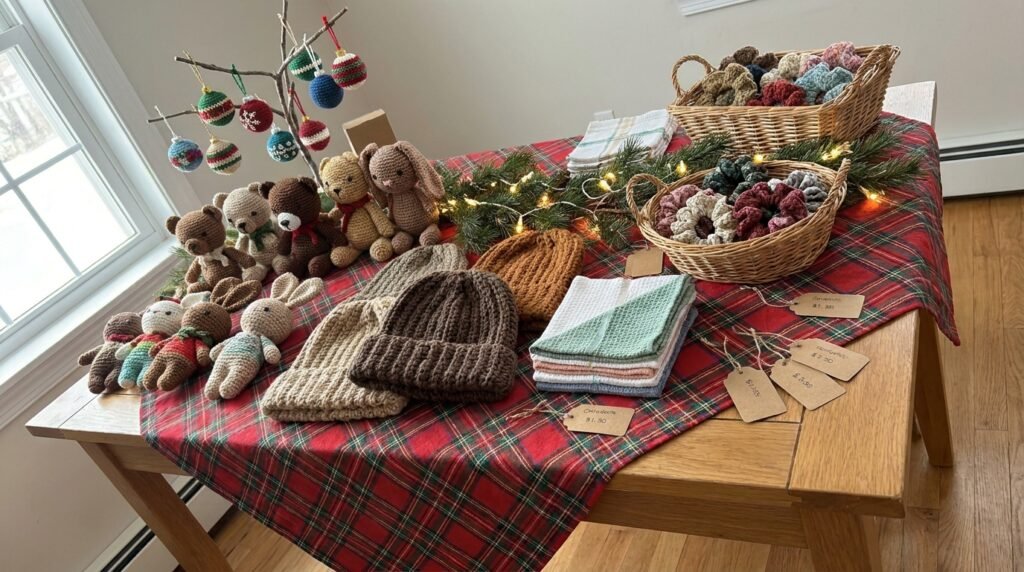
Every November, the same question pops up in crochet groups: “I’ve got a holiday market table booked — what should I actually make?” It’s a fair worry. You can spend 12 hours on a gorgeous blanket that nobody picks up, while the person next to you sells out of $8 scrunchies by lunch.
The good news: the crochet items that sell follow a pretty predictable pattern. They’re quick to make, easy to understand at a glance, priced for an impulse “yes,” and they solve a small problem or make a great gift. This guide walks you through the best sellers by category, which ones are worth your time, how to price them so you actually earn something, and how to plan your stock for a holiday craft fair or an online shop.
Quick answer: what crochet items sell best?
The most reliable crochet items to sell are small, giftable and quick to make: amigurumi (small stuffed animals and characters), beanies and ear warmers, Christmas ornaments, cotton dishcloths and coaster sets, scrunchies and hair accessories, bag charms and keychains, and baby items like hats and loveys. Mix lots of low-priced “impulse” pieces with a few eye-catching higher-priced items, and choose designs that fit the season you’re selling in.
Table of contents
- What makes a crochet item sell?
- The best crochet items to sell (by category)
- What crochet items sell best for Christmas?
- Easy crochet items to sell if you’re a beginner
- What’s trending in crochet right now?
- How to price crochet items so they’re worth it
- How much stock to bring to a craft fair
- Selling crochet online vs. at markets
- Common mistakes crochet sellers make
- FAQ
What makes a crochet item sell?
Before you pick projects, it helps to know what shoppers are actually reacting to when they stop at a handmade table. In practice, the crochet items that sell well usually tick at least three of these boxes:
- Instantly recognizable. A shopper should know what it is within two seconds. “Oh, a little octopus!” sells. “Hmm, is that a… pouch?” doesn’t.
- Giftable. Most fair and holiday shoppers are buying for someone else. If an item makes a person think of a specific friend, niece or coworker, it’s halfway sold.
- Affordable on impulse. Small items that don’t need a long internal debate move fastest. Bigger pieces can sell too, but they rarely carry a whole table.
- Fast for you to make. An item that takes 30–60 minutes can be priced fairly and still be affordable. A 20-hour item almost never can.
- Useful or cute — ideally both. Dishcloths sell because they’re useful. Amigurumi sells because it’s adorable. A scrunchie is both.
- Seasonal. In November and December, anything with a Christmas or winter feel gets a boost. Spring markets favor cotton, pastels and baby gifts.
Keep that checklist in mind as you read the list below. When you’re unsure about a new idea, run it through those six points first.
The best crochet items to sell (by category)
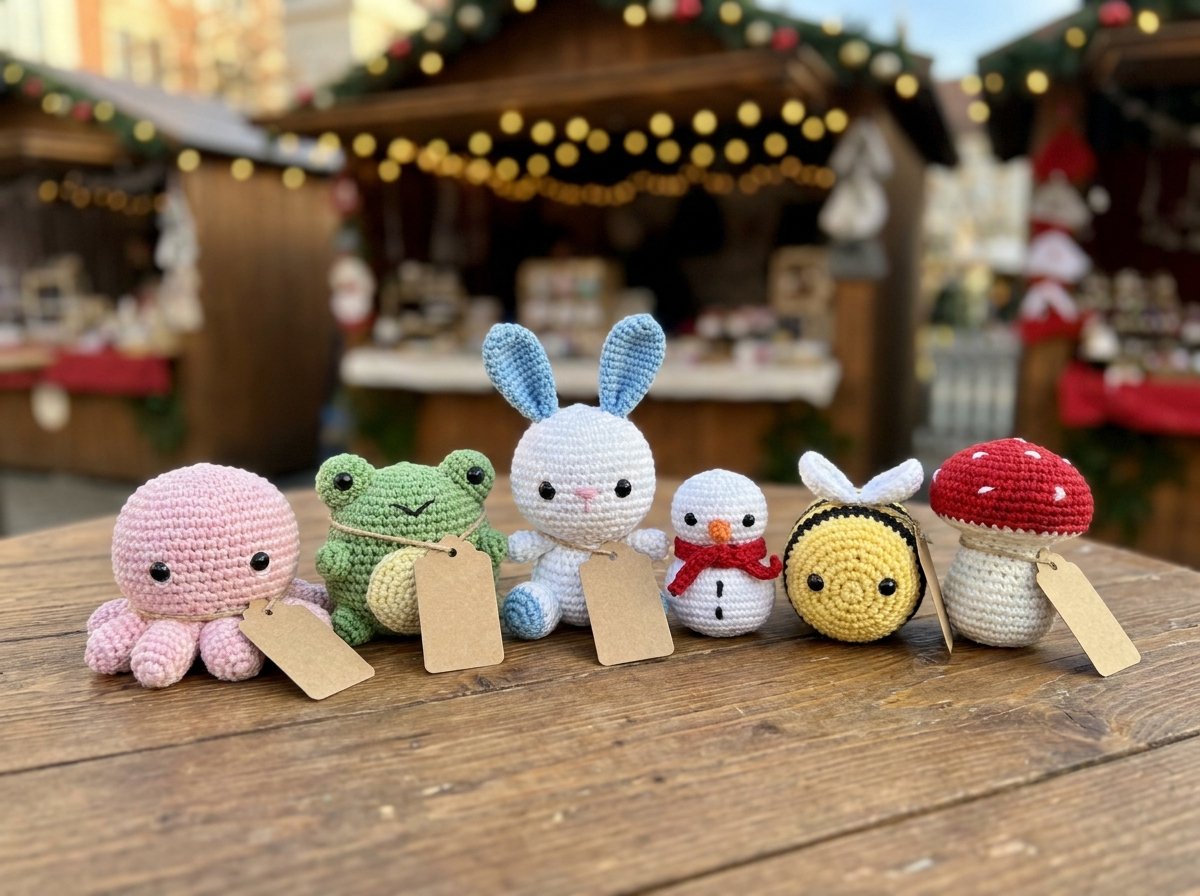
1. Amigurumi (small stuffed animals and characters)
Amigurumi is the closest thing crochet has to a guaranteed crowd-pleaser. Little whales, octopuses, bees, frogs, bunnies, snowmen and mushrooms pull people in — especially kids, who do a lot of the “selling” for you. Small pieces (palm-sized) are the sweet spot: fast enough to batch, cheap enough to price well.
- Best formats: 2–4 inch minis, “no-sew” designs, plushies with a simple safety-eye face.
- Tip: make 3–5 colors of the same design. A row of identical shapes in different colors looks intentional and lets buyers “choose their favorite,” which speeds up decisions.
- Safety note: if you sell toys for babies and toddlers, embroider the eyes instead of using plastic safety eyes, and stitch tightly so stuffing can’t escape.
New to stuffed toys? Our amigurumi for beginners guide covers the basic techniques and includes a free snowman pattern that’s perfect for a holiday table.
2. Beanies, ear warmers and headbands
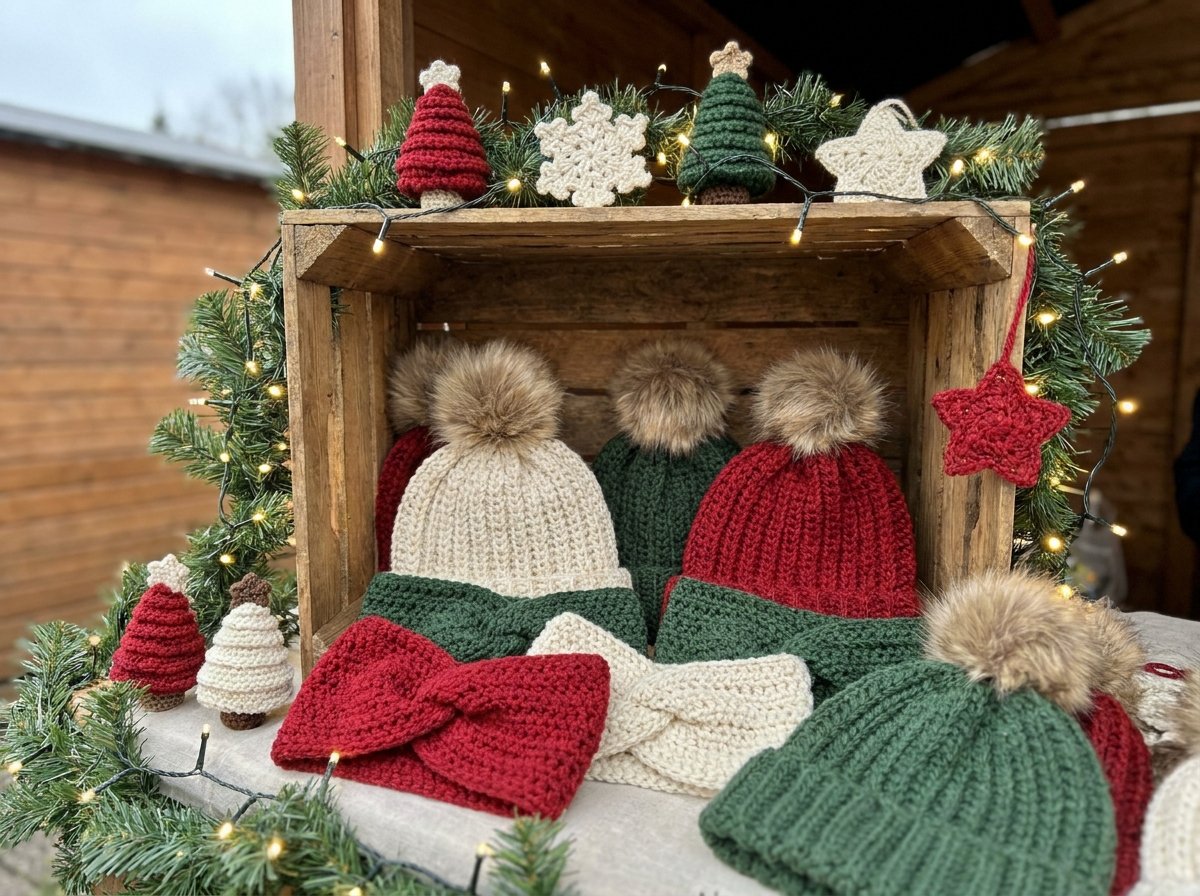
Winter accessories are a cold-weather market staple. They’re quick, they come in endless colors, and people often buy them on the spot because they’re actually cold. Ear warmers and twisted headbands are especially good because they’re one-size-friendly and fast to make.
- Beanies: offer a few sizes (child, teen, adult) and a couple of colorways. Faux-fur pompoms add perceived value for very little effort.
- Ear warmers: our twisted ear warmer pattern works up quickly in worsted weight yarn and looks more complicated than it is.
- Hats in an hour: the 1-hour easy crochet hat includes a size chart so you can stock kids’ and adult sizes.
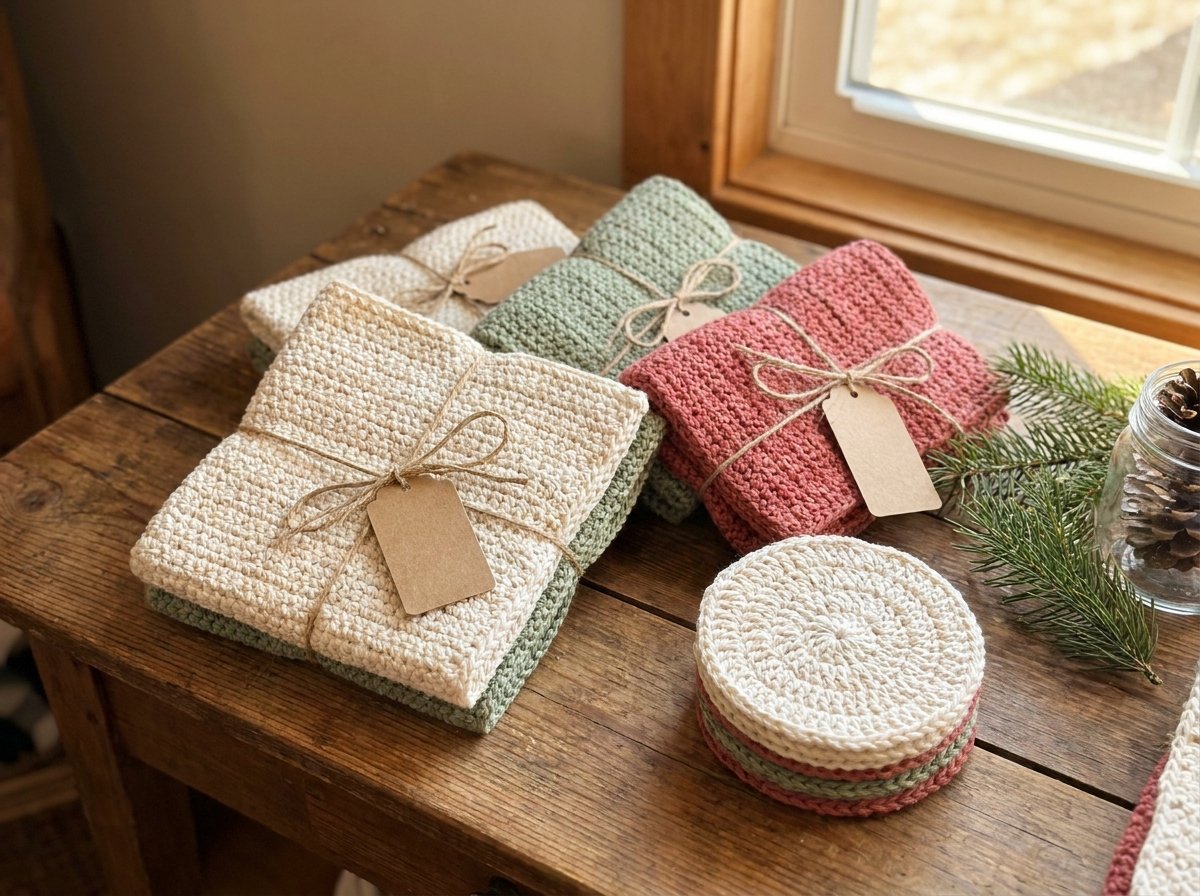
3. Cotton dishcloths, scrubbies and coaster sets
Kitchen items are the quiet workhorses of a crochet booth. They don’t get as many “aww”s as amigurumi, but people who use handmade dishcloths come back for more. They’re also a classic “I need a small gift for the teacher / neighbor / host” purchase.
- Sell them in bundles (2 or 3 dishcloths tied with twine, or 4 coasters in a stack). Bundles raise your average sale without feeling expensive.
- Use 100% cotton yarn — acrylic doesn’t absorb water and buyers who know crochet will notice.
- Our simple cotton dishcloth pattern is a great batching project.
4. Scrunchies, hair clips and bag charms
These are the ultimate impulse items: tiny, colorful and cheap enough to grab with no hesitation. Teens and younger shoppers love them. Crochet flower hair clips, mini strawberry or heart bag charms, and keychains also fill a basket by the register beautifully.
- They use scraps, so your material cost is close to zero.
- Display them in a bowl or basket near where people pay — they’re the “one more thing” purchase.
5. Crochet flowers and bouquets
Crochet flowers have become a big gift item because they “never die.” Single stems, small bouquets wrapped in paper, and potted mini plants all sell well — around Valentine’s Day, Mother’s Day and graduations especially, but also as Christmas gifts.
6. Baby items
Someone always knows someone who’s having a baby. Baby hats, booties, small loveys (a tiny blanket with a stuffed head) and soft rattles are all strong sellers. Keep them in soft, washable yarn and add a care tag so buyers feel confident.
7. Bags and market totes
Mesh market bags, small crossbody bags and pouches sell well, particularly at spring and summer fairs. They take longer than a scrunchie, so they’re best as a mid-priced item. The easy crochet bag for beginners is a solid starter design with two variations you can offer side by side.
8. Bigger statement pieces
Blankets, shawls and sweaters rarely sell in big numbers at a local fair — the price has to be high to be fair to you, and that limits buyers. But one or two well-made statement pieces still earn their spot: they show your skill, make your booth look established, and occasionally lead to a custom order. Bring them as “display pieces that are also for sale,” not as the backbone of your stock.
What crochet items sell best for Christmas?
If your market falls between mid-November and Christmas, lean hard into the season. Shoppers are actively looking for gifts, stocking stuffers and decorations. The strongest holiday sellers are:
- Christmas ornaments: mini trees, snowflakes, stars, mini stockings and little gnomes. They’re quick, cheap to make and easy to sell in sets. Our 5 free beginner ornament patterns are a good place to start.
- Gnomes: still a huge holiday favorite. Try a few sizes and beard colors — see our free Christmas gnome pattern.
- Mini stockings and gift card holders: people love buying a small handmade stocking to hold a gift card. That’s a gift for a gift.
- Holiday amigurumi: snowmen, reindeer, penguins and polar bears.
- Winter accessories: beanies, ear warmers, fingerless gloves and slippers.
- Wreaths and table decor: a small wreath or a set of coasters in red, green and cream makes a ready-made hostess gift.
For more seasonal inspiration, browse our 12 quick Christmas gift ideas you can make in one evening — almost every item on that list doubles as a good market seller.
Easy crochet items to sell if you’re a beginner
You don’t need years of experience to sell crochet. You need a handful of simple designs you can make consistently and neatly. If you’ve only mastered a few stitches, start with these:
- Dishcloths: squares or rectangles in single crochet or half double crochet.
- Coasters: small circles or granny squares — a set of four is a quick, giftable bundle.
- Scrunchies: single crochet or double crochet worked around a hair elastic.
- Ear warmers and headbands: a long rectangle, joined (and twisted, if you like).
- Simple scarves: straight rows in a soft yarn. Our adjustable half double crochet scarf is a good choice.
- Bookmarks and simple ornaments: tiny, fast and nearly free to make.
The key for beginners is consistency. Pick 3–4 items, make each one several times until your tension and edges are even, and only then add new designs. If your edges are wavy or your pieces look different sizes, our guide on why crochet curls and how to fix it will help — and a quick blocking session makes flat items look far more professional.
For a bigger list of fast projects to choose from, see 15 easy crochet projects for beginners.
What’s trending in crochet right now?
Trends shift quickly, and what’s hot online isn’t always what sells at a small-town fair. Still, a few styles keep showing up across social media, Pinterest and handmade markets:
- Plush “squishy” amigurumi made with chenille or velvet-style yarn.
- Granny square everything: bags, cardigans, pillow covers and coasters.
- Crochet flowers and mini potted plants.
- Bag charms and keychains — tiny characters, fruit and hearts clipped to purses and backpacks.
- Cozy home pieces like mug cozies, tissue box covers and small pillows.
- Chunky, textured accessories in neutral and earthy colors.
A practical way to use trends: keep your core best sellers steady, and add one or two “trend” items each season to test. If they sell out, make more next time. If they sit, you haven’t lost much.
How to price crochet items so they’re worth it
Pricing is where most crochet sellers struggle. Handmade work takes time, and it’s tempting to underprice so things sell. But if you price below your costs, every sale makes you poorer. Here’s a simple formula many makers use as a starting point:
Price = materials + (hours × your hourly rate) + extras (tags, packaging, fees), then round to a friendly number.
Then sanity-check the result against what similar items sell for at local fairs and online. If the formula gives a price far above what shoppers will pay, that’s a sign the item is too slow to make for selling — not that you should work for less. Look for a faster design, a smaller size, or a simpler stitch.
A few more pricing tips:
- Have a price ladder. Offer some low-priced impulse items, a solid middle range, and a few premium pieces. Shoppers can then find something at their comfort level.
- Use bundles. “1 for $X, 3 for $Y” works well for ornaments, scrunchies and dishcloths.
- Price everything clearly. Many shoppers won’t ask. Small kraft tags or a simple sign for each basket removes friction.
- Know your yarn cost. Check yardage before you start — our guide on how much yarn a blanket needs shows how quickly yarn costs add up on big pieces.
- Remember fees. Booth fees, card reader fees and online platform fees all come out of your price.
How much stock should you bring to a craft fair?
There’s no perfect number, because it depends on the event size, foot traffic and your price points. A good rule of thumb is that your table should look full and abundant, without being cluttered. Empty tables look like you’ve sold out (or haven’t prepared), and shoppers walk past.
- Batch your best sellers. Make more of the cheap, fast items than anything else — they sell in the highest numbers.
- Bring a few big pieces for height and visual interest, even if you only expect to sell one.
- Use height and baskets. Crates, risers and small baskets make a table look full with less stock.
- Keep a list of what you brought and what sold. After two or three events, that list will tell you more than any blog post.
- Take custom-order cards. If someone loves a design in a different color, a business card or a QR code to your shop turns “maybe” into a later sale.
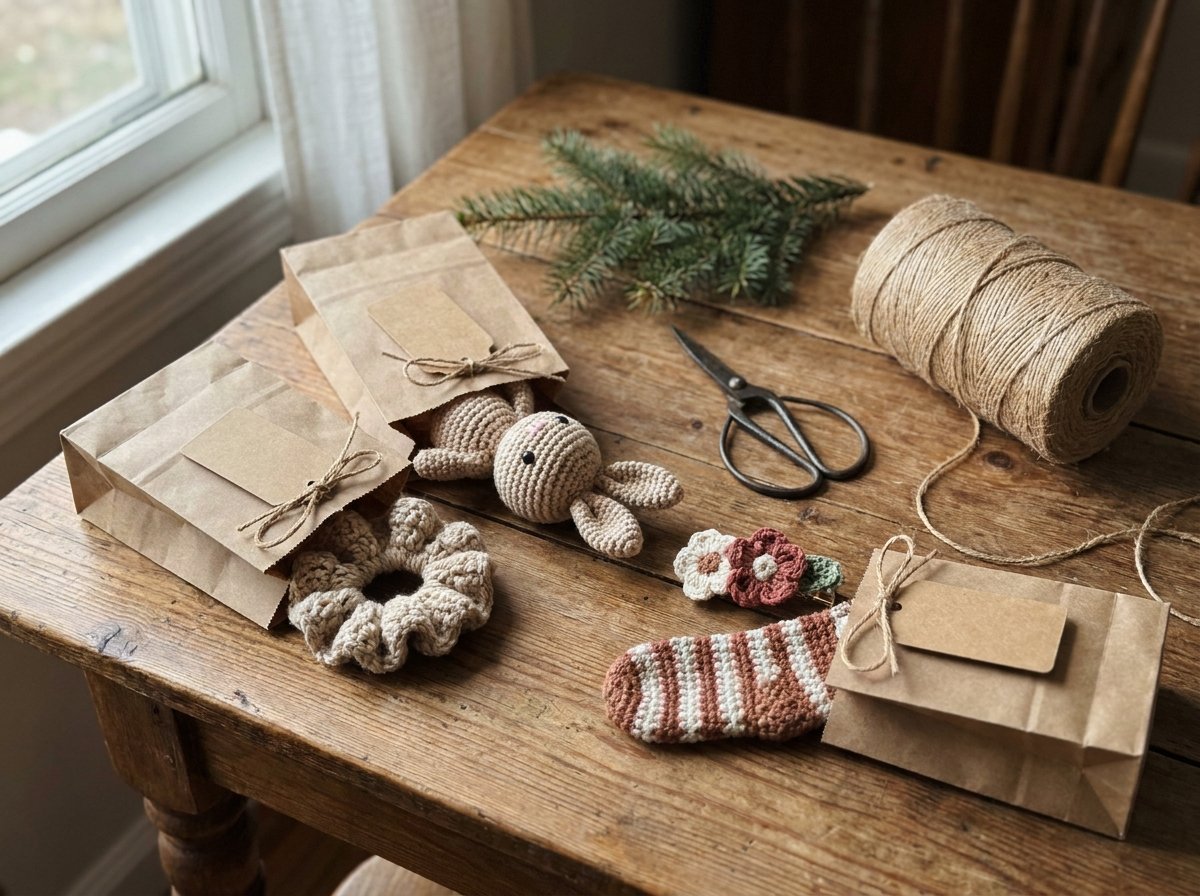
Selling crochet online vs. at craft fairs
Both work, but they reward slightly different products.
- Craft fairs and holiday markets favor small, cheap, touchable items. People pick things up, feel the yarn and buy on impulse. Personal interaction matters a lot.
- Online shops favor items that photograph beautifully and that people actively search for — specific characters, personalized items, and unique designs. Shipping costs make very cheap items harder to sell individually, so bundles and sets work better online.
- Selling patterns is a third option. A digital crochet pattern takes time to design and test, but you make it once and can sell it many times with no yarn or shipping costs. If you’d rather buy tested patterns for your own market makes, you’ll find ready-to-use PDF patterns in the Yarvella Crochet pattern shop.
One important note: if you sell finished items made from someone else’s pattern, check the designer’s terms. Many designers happily allow small-scale selling (often with credit), but some don’t, and character designs based on famous brands can’t be sold at all.
Common mistakes crochet sellers make
- Making only big items. A table of blankets looks impressive but sells slowly. Balance it with plenty of small, quick pieces.
- Underpricing. Pricing to “just cover yarn” undervalues your time and the whole handmade community. Use the formula above.
- Too many one-offs. Twenty different designs, one of each, makes your table feel random. Fewer designs in several colors looks curated.
- Ignoring the season. Bringing cotton sun hats to a December market (or wool beanies to a July one) costs you sales.
- Uneven quality. Loose ends, wobbly edges and uneven sizes are noticed. Weave in ends securely, block flat items and check every piece before it goes on the table.
- No way to pay by card. Many shoppers no longer carry cash. A card reader can be the difference between a sale and a “sorry.”
- No follow-up. If shoppers can’t find you again, you lose repeat customers. A simple card with your shop or social handle helps.
Crochet items that sell: FAQ
What is the most sold crochet item?
There’s no official sales ranking, but sellers consistently name small amigurumi, beanies and winter accessories, dishcloths and coasters, scrunchies and seasonal ornaments as their best movers. They’re quick to make, easy to price affordably and very giftable.
What crochet items are trending in 2026?
Plush amigurumi in chenille-style yarn, granny square bags and cardigans, crochet flowers, bag charms and keychains, and cozy home items like mug cozies and pillow covers are all popular. Test one or two trend items alongside your steady best sellers.
What are some easy things to crochet for Christmas to sell?
Mini Christmas trees, snowflakes, stars, mini stockings, gnomes, snowmen, ear warmers and holiday coaster sets are all quick to make and sell well in November and December.
Is selling crochet items profitable?
It can be, as long as you choose fast items and price them to cover materials, your time and fees. Slow, large items are usually hard to sell at a fair price, so most profitable sellers focus on small pieces made in batches.
Can a beginner sell crochet items?
Yes. Many sellers start with dishcloths, coasters, scrunchies and ear warmers. Focus on making a few designs neatly and consistently before expanding your range.
Can I sell items made from free crochet patterns?
Often yes, but it depends on the designer. Always check the pattern’s terms of use, give credit if asked, and never sell items based on trademarked characters.
Where can I sell my crochet items?
Holiday markets, craft fairs, farmers’ markets, school and church bazaars, local boutiques on consignment, and online platforms or your own shop are all common options. Many sellers combine in-person events with an online store.
Final thoughts
The crochet items that sell aren’t always the most impressive ones you can make — they’re the ones a shopper understands in a glance, can picture giving to someone, and can buy without thinking twice. Start with a small core of quick best sellers, add seasonal favorites for the holidays, price for your time, and keep notes on what flies off your table. After a couple of markets, you’ll know your own best sellers better than any list.
Ready to stock up? Pick two items from this list, make a small batch this week, and you’ll be well on your way to a full holiday table.
Keep making
How to Crochet a Pumpkin: Easy Free Pattern for Beginners
Learn how to crochet a pumpkin the easy way: a flat ribbed rectangle you roll, stuff and shape. Free beginner pattern in 3…
Read the guide
How to Block Crochet: Wet, Spray & Steam Blocking for Any Yarn
Learn how to block crochet the right way for wool, cotton and acrylic: step-by-step wet, spray and steam blocking, tools, drying times and…
Read the guide