
Why Is My Crochet Curling? Find the Cause and Fix the Edge
Find out why crochet curls at the foundation, sides, border or rounds, then use targeted fixes for a flatter blanket or square.
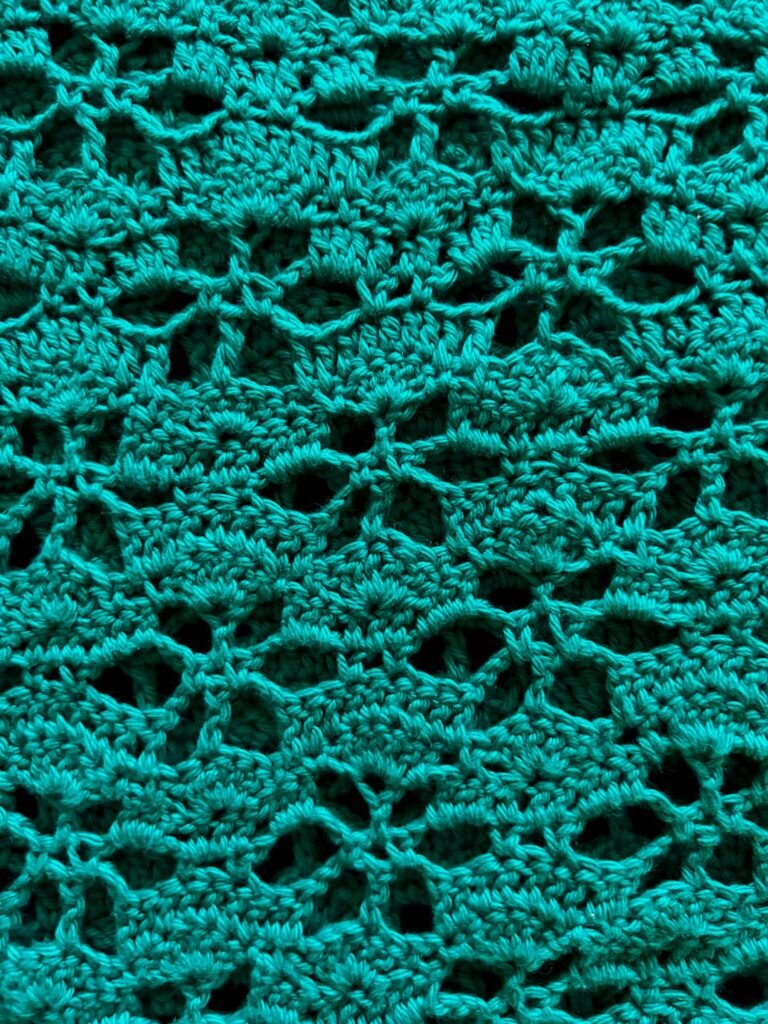
A new crochet piece often curves a little in your hands. The useful question is where it curls and whether it still lies that way when you set it down. A tight foundation, an inconsistent stitch count, an overfilled border, and the natural shape of a round project call for different fixes. Find the first place where the shape changes before you undo rows or add a border.
Quick diagnosis: If the starting edge bends like a smile, compare its length with the rows above it. If the side tapers, count stitches from the first uneven row. If the outer edge ripples, inspect the newest row or border for extra stitches. If a circle cups, compare increases with the pattern rather than trying to stretch it flat.
Illustrative photograph: dkgreenlee via Unsplash. The pictured crochet fabric is a texture reference, not a demonstration of each problem described below.
First, let the fabric rest flat
Put the work on a table without pulling the corners. Measure or compare the beginning edge, current edge, and both sides. Turn it over and see whether the behavior changes. A small piece held in the hands can roll because of tension from the working yarn; a persistent curve across several rows deserves a closer look.
Keep your hook, yarn label, and a row count nearby. Compare the stitch count of a straight row with a row before the curve began. A single missed edge stitch repeated over several rows can change the shape more than a slightly tight hand.
Why is the foundation edge curling?
The foundation chain may be shorter and tighter than the fabric worked into it. If the next rows spread wider while the first edge stays contracted, the piece arches. Make a short new sample with a more relaxed chain, or use a slightly larger hook only for the foundation and switch back for the body. Compare samples before remaking a large project.
Do not assume that pulling hard while blocking will permanently correct a severely short foundation. If the first edge is clearly too small, remaking the start is more reliable. For a fresh project, the beginner crochet guide helps you choose yarn and a first hook, while the single crochet guide covers straight rows and edge counting.
Why are the sides narrowing or leaning?
Count the stitches in several consecutive rows, including the first and last stitch at each edge. If the count drops, look for a missed final stitch or a turning chain counted inconsistently. Place a marker in the first and last stitch of each new row until you can identify them without guessing.
If the counts match but the side still leans, compare where you insert the hook and how you turn. Some patterns count the turning chain as a stitch and others do not. Use one convention for the whole project. Unravel only to the first row where the width changed, then remake that section with the correct count.
Why does the newest row wave outward?
A ruffled edge usually has more length than the fabric beneath it. Accidental increases can come from placing two stitches in one spot, working into both a turning chain and the first stitch when the pattern treats them as one, or adding too many stitches along row ends. Count a small repeat and inspect the latest row before changing hook size.
If the ripple appeared only after you added an edging, the blanket body may be fine. Remove the border section that waves and space the stitches farther apart. Our crochet blanket border guide explains how to test a foundation round and corners as you go.
Why does a crochet circle cup instead of lying flat?
A flat circle needs enough increases to make room for each new round. Too few increases encourage the sides to rise into a bowl; too many can produce a wavy outer edge. Count stitches at the end of each round and compare them with the particular pattern you are following. An increase schedule for one stitch height or yarn setup is not a universal schedule for another.
If you are making a granny square rather than a circle, inspect each corner space. Missing or cramped corner stitches can draw the square inward. For the structure of a traditional square, see our classic granny square tutorial.
Can a different hook fix curling?
Sometimes, but use it as a test rather than an automatic cure. A larger hook can make a tight fabric more flexible. It cannot replace missing edge stitches or correct too many increases. Make two small swatches with the same yarn, one with your current hook and one with the next size up. Wash and dry them according to the yarn label before judging their drape.
If one stitch pattern naturally makes a firm, dense fabric, a looser hand may change its feel. It may also change the finished size, so measure again before applying that change to a blanket. If you are choosing a project from scratch, compare options in our first blanket stitch guide.
Will blocking make crochet lie flat?
Blocking can relax a consistent fabric and even out modest differences. Follow the yarn label for washing and drying, and pin only within the fiber’s reasonable stretch. It should refine the shape you have crocheted. It will not reliably conceal a row-by-row count error, an overly short foundation, or a border with too many stitches.
Test a small swatch first if the fiber is unfamiliar. Let it dry completely before measuring. If the curve returns as soon as the fabric is handled, revisit the stitch structure rather than repeatedly stretching it.
A quick fix checklist
Starting edge curves: remake a short sample with a looser foundation. Sides taper: count every row and mark both edges. New row ruffles: find extra stitches or increases. Border waves: adjust side and corner placements. Round cups: check the pattern’s increase counts. Even fabric rolls slightly: test a swatch and gentle blocking before changing the project.
Frequently asked questions
Is curling normal in the first few rows?
A little movement can be normal in a small piece, especially while you hold it. Lay it flat after several rows. If the foundation remains much shorter than the fabric above, test a looser starting edge before making the whole project.
Should I add a border to straighten a crooked blanket?
Only after you know why it is crooked. A simple border can tidy a reasonably even edge, but it will not restore missing rows or make a changing stitch count square. Correct the body first, then decide whether a border improves the finish.
Is tight or loose crochet better?
Neither is universally better. Aim for consistent stitches that suit the project. A dishcloth may benefit from firmness; a blanket usually needs comfortable drape. Your sample tells you more than a rule about how tightly everyone should crochet.
The fastest fix begins with a count and a flat surface. Once you know where the shape changed, you can correct a small section instead of guessing at the whole blanket.
Keep making

Easy Crochet Christmas Ornaments: 5 Free Beginner Patterns
Make 5 easy crochet Christmas ornaments: a candy cane, bauble, star, mini hat and holly, with free beginner patterns in US terms, tips…
Read the guide
Gifts for Crocheters: 30 Ideas They’ll Actually Use (by Budget)
The best gifts for crocheters, sorted by budget: ergonomic hooks, yarn tools, project bags, stocking stuffers and handmade ideas, plus how to buy…
Read the guide