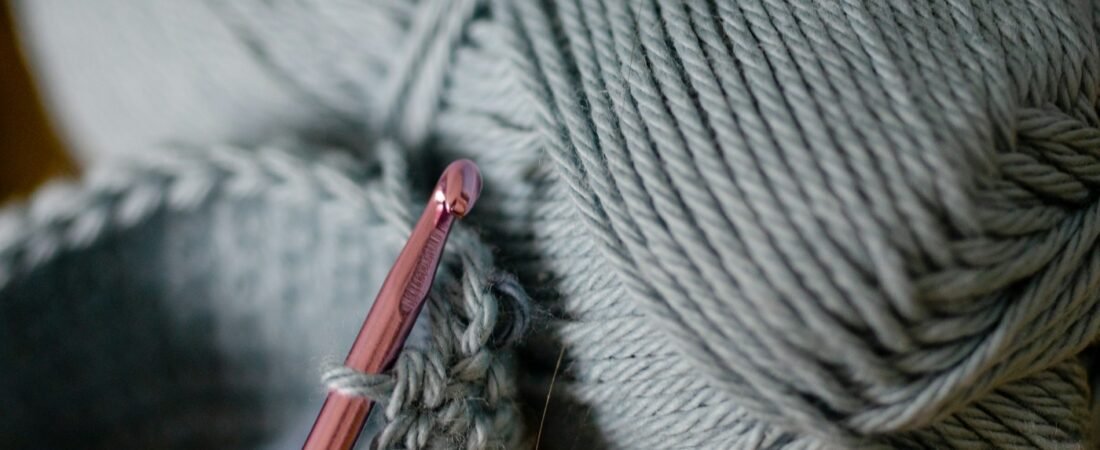
Illustrative crochet photograph by Alex Preusser via Unsplash. This is not a photograph of a Yarvella-tested sample.
A small cotton dishcloth is an approachable way to turn practice into something useful. It is worked back and forth in single crochet, with no shaping or joining required. Choose a color you enjoy looking at, then let the repeated rows become a little daily ritual.
Gather your materials
- Approximately 50–80 g of washable cotton yarn as an initial allowance; keep extra available if making a larger cloth.
- A hook near the yarn label recommendation.
- Two stitch markers, scissors, a ruler and a blunt yarn needle.
Choose yarn whose care instructions suit regular washing. Make a small swatch and wash it first if finished size matters; cotton can change after laundering.
Choose a width
A cloth around 18–22 cm wide is a convenient starting idea, but you can make it larger or smaller. Chain until your foundation is approximately the width you want, without stretching it, then add one turning chain.
For an easy practice version, chain 31. The first row will contain 30 single crochet stitches. That stitch count does not guarantee a particular finished width; measure the row and restart with more or fewer chains if needed.
Work the rectangle
- Make one single crochet in the second chain from the hook and in every remaining chain. Count the stitches.
- Chain one and turn. The turning chain does not count as a stitch.
- Work a single crochet in the first stitch and in every stitch across. Finish in the last real stitch.
- Repeat the last two steps until the height is close to the width, or until your rectangle reaches your preferred length.
Mark the first and last stitches and move the markers after each row. Keep the number of stitches unchanged. If you started with 31 chains, each row should contain 30 stitches.
Finish without a border
For your first cloth, a plain edge is enough. Cut the yarn, leaving a tail of roughly 15 cm, pull it through the final loop and weave it through several stitches using a blunt needle. Change direction before trimming.
Wash and dry according to the label, then smooth the cloth into shape. Avoid pulling it aggressively to compensate for uneven rows; identify the counting problem on your next piece.
Care and everyday use
Rinse after use and let the cloth dry fully between uses. Wash regularly and follow the fiber care label. This is a household cloth, not a potholder or a heat-protection project.
Make your next version personal
Try a second color, a smaller face-cloth size or a longer rectangle. Keep the stitch structure the same until the edges feel comfortable. If you need a reminder of the movement, return to our single crochet tutorial.