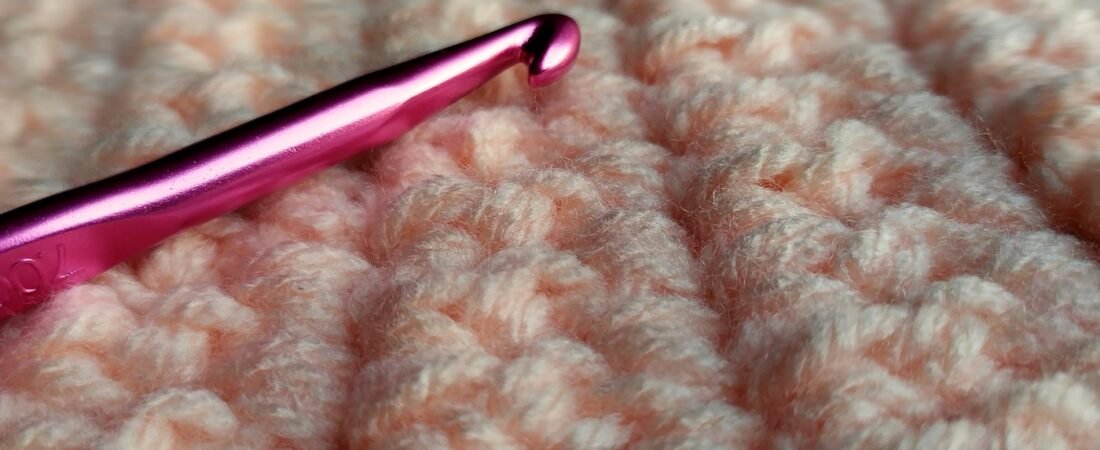
Illustrative crochet photograph by Karina L via Unsplash. This is not a photograph of a Yarvella-tested sample.
Half double crochet sits between single crochet and double crochet in height. It creates a fabric that is useful for scarves, practice squares and simple accessories. This lesson uses US terms; the UK name for the same stitch is half treble crochet.
Before you start
Use smooth yarn and its suggested hook size. Have two stitch markers nearby. If inserting your hook still feels unfamiliar, practise single crochet first; it teaches you to recognize the top of a stitch.
Make one half double crochet
- Yarn over before inserting the hook.
- Insert the hook into the indicated stitch, normally under both top loops.
- Yarn over and draw a loop through the stitch. You should have three loops on the hook.
- Yarn over once more and pull through all three loops. One loop remains.
The final pull-through is easier when you rotate the hook slightly downward so its tip does not catch the loops. Avoid squeezing the working yarn tightly while you do it.
A 12-stitch practice swatch
For this exercise, the turning chain does not count as a stitch. Other patterns may use a different rule; always follow their notes.
- Chain 14.
- Work a half double crochet in the third chain from the hook, then in every remaining chain: 12 stitches.
- Chain two, turn, and make a half double crochet in the first real stitch.
- Continue across the row, finishing in the last real stitch: 12 stitches.
- Repeat until you have a small rectangle.
Finding the right loops
Half double crochet has an extra strand often called the third loop. In this basic exercise, work under the normal two loops at the top of the stitch. Choosing the third loop is a separate technique that produces a different surface.
Mark the first and last real stitches on every row. If your count changes, check the edges before changing your tension. The turning chain can look like a stitch and is a common place to add an unwanted extra one.
Adjusting tension
If pulling through three loops feels difficult, make the loops slightly looser on the straight part of the hook. If the fabric has much larger holes than you want, test a smaller hook on a new swatch. Compare the fabric rather than assuming one hook size works for every yarn.
Where to use this stitch
A plain scarf is a good follow-on project because it repeats one row. Decide its finished width from a swatch, then keep that stitch count unchanged. For fitted items, measure gauge and follow a complete pattern rather than estimating from a photograph.
Keep this swatch beside your single crochet sample. Feeling the difference in height and flexibility helps you choose the right fabric for your next project.
Terminology reference: Craft Yarn Council.