
Reversible Crochet Stitches: How to Choose Fabric That Looks Good on Both Sides
Compare everyday reversible stitch options, learn what reversibility really means, and use a simple swatch test before starting a scarf or blanket.
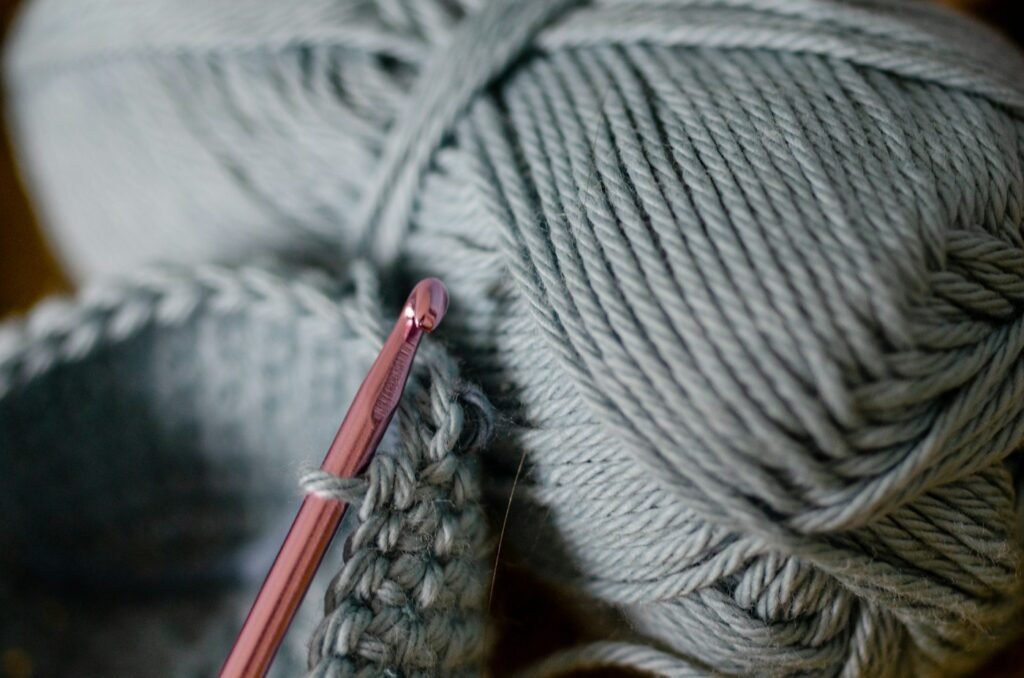
A scarf twists when you wear it. A blanket folds over the arm of a chair. A table runner can be turned upside down after washing. For these projects, the reverse of your crochet fabric matters almost as much as the front.
Choosing a reversible stitch does not mean finding a fabric with absolutely identical faces. It means deciding what you want both sides to do: look balanced, feel comfortable, conceal loose ends or show a deliberate texture. This guide compares four accessible options and gives you a practical way to judge them in your own yarn.
What makes a crochet stitch reversible?
Look at the whole fabric rather than one stitch. A single crochet worked in turned rows shows different parts of the stitch as you turn the work, but the resulting surfaces can both look tidy. A heavily raised motif may have a dramatic front and a flatter reverse. Either fabric might work for your project; the important point is knowing the difference before making a large piece.
It helps to separate three ideas. Visually similar fabric has closely related surfaces. Attractive on both sides fabric may show distinct but intentional textures. Functional on both sides fabric has finishing and construction that allow it to be used either way. A pretty stitch alone does not guarantee the third quality.
One exposed seam or a row of loose color tails can make a reversible scarf feel unfinished. Think about the edging, joining method and color changes from the beginning, especially when both faces will regularly be visible.
Four accessible stitches to compare
| Stitch | Fabric tendency | Worth trying for | Watch for |
|---|---|---|---|
| Single crochet in turned rows | Compact, with a fairly firm surface | Simple cloths, sturdy panels, practice pieces | Stiffness if tension is tight |
| Half double crochet in turned rows | Moderate stitch height and visible horizontal texture | Everyday scarves and blankets | Extra loops that can confuse stitch placement |
| Double crochet in turned rows | Taller stitches and a more open fabric | Light wraps and less dense blankets | Edge gaps and turning-chain rules |
| Moss stitch | Small alternating stitches and chain spaces | Scarves, blanket panels and cotton cloths | Finding the final edge space |
These descriptions are tendencies, not promises. A tightly worked double crochet in thick yarn can feel firmer than loose single crochet in a fine yarn. Fiber, hook size and your own tension affect the result as much as the stitch name.
Single crochet: a useful baseline
Single crochet is an excellent comparison sample because its movement is easy to repeat. In ordinary turned rows, work under both loops at the top of each stitch. The surface is compact, and both sides can look tidy without an elaborate repeat.
For a learning swatch, chain 21. Work single crochet into the second chain from the hook and each remaining chain: 20 stitches. Chain one, turn and make one single crochet in every stitch across. The turning chain does not count as a stitch here. Keep 20 stitches on each row.
Hold the finished swatch over your hand. If it stands away from your fingers rather than falling around them, it may be too firm for the scarf you have in mind. That does not make it bad fabric; it may simply be better suited to a structured project.
Half double crochet: compare softness and texture
Half double crochet begins with a yarn over. Insert the hook into the stitch, yarn over and pull up a loop, then yarn over and pull through all three loops. Its extra strand creates texture that is worth examining from both faces.
For a 20-stitch exercise, chain 22 and work half double crochet into the third chain from the hook and every remaining chain. Chain two and turn. In this exercise, the turning chain does not count as a stitch, so work the first stitch into the first real stitch and finish in the last real stitch.
Do not accidentally work into the third loop when you intended to use both top loops. Third-loop techniques are useful, but they create a different sample. Label your swatch so you know which version you made.
Double crochet: test the openness
Double crochet produces taller stitches. The fabric often grows vertically faster than shorter stitches, but its spaces may be more visible. For a wrap, that can be welcome. For a dense winter scarf, you may prefer another fabric.
Turning-chain conventions vary between patterns. Some count the starting chain as the first double crochet; others do not. Read that note carefully rather than carrying a rule from a different project. An extra edge stitch changes the width, while a missed final chain can make the fabric narrower.
When judging reversibility, examine the sample both flat and folded. A stitch that looks even on the table can reveal a less balanced edge when the piece hangs vertically.
Moss stitch: a small, regular repeat
Moss stitch alternates single crochet and chain spaces. In subsequent rows, stitches are worked into the chain spaces rather than stacked directly into every single crochet below. This produces a regular surface that is useful when you want an understated texture.
A single-color sample is the easiest place to begin. Color stripes can change the appearance of the two faces, and carried yarn may be visible along an edge. Learn the repeat first, then test your intended color sequence in a separate sample.
Use the complete moss stitch guide for a small exercise with explicit edge instructions. Compare its flexibility with your single and half double crochet samples instead of assuming it will always drape more softly.
A comparison test that tells you something useful
Use the same yarn and begin with the same hook for each stitch. Aim for samples large enough to handle comfortably. A very small patch can hide edge problems and makes drape difficult to judge. Record the hook size, stitch pattern, starting count and number of rows on a paper label.
Measure each swatch before washing. Then wash and dry it according to the yarn label and measure again. If you expect to wash the finished project regularly, this second measurement is the one that matters. Inspect both faces under ordinary daylight, not only under a bright close-up light.
Fold the sample, hold it against clothing and run your fingers over each side. Notice whether the texture catches, whether the piece feels heavy and whether the edges remain relaxed. If a swatch is too firm, try a different hook on a new sample. Increasing hook size can create more flexibility, but it may also enlarge the holes.
Keep the finishing reversible too
Weave in tails carefully through the fabric rather than leaving a long strand across one surface. Check both sides after securing them. With an open stitch, it may take a little planning to hide a tail without creating a thick patch.
If the project contains joined panels, test the seam on two small pieces first. Some joins create a raised ridge on one side. That ridge may be an attractive design choice, but it means the two faces will not look the same.
Add a border only after you understand the unbordered sample. A border should support the edge, not disguise a growing stitch-count problem. If the fabric has started narrowing over several rows, correct the missing stitches before finishing.
Which reversible crochet stitch is best for a scarf?
Moss stitch and plain half double crochet are useful scarf options when both sides will be visible. Moss stitch gives a small, orderly texture; half double crochet offers a simple row repeat. Work a sample in the actual yarn, turn it over, and feel it against your neck before choosing. Reversible does not always mean identical on both sides.
For an adjustable first project, follow our simple crochet scarf instructions. For a broader texture comparison, see beautiful crochet stitches and how to choose one.
Common questions
Does reversible mean identical?
No. Both sides may be suitable for use while showing different stitch details. Inspect the actual fabric and decide whether that difference suits your project.
Can I use more than one color?
Yes, but test the color changes, carried strands and tail placement. Reversibility depends on the finished construction as well as the basic stitch repeat.
Which option should a beginner try first?
Start with single crochet, then compare half double crochet. Once you can keep a steady count and find the edges, moss stitch introduces a useful space-based repeat.
Should I block every sample?
Follow the yarn care instructions and the intended finishing process. If the finished item will be blocked, judge a sample finished in the same way. Avoid assuming that aggressive stretching will repair inaccurate stitch counts.
Keep your samples together. Over time, that small collection becomes more useful than a list of stitch names: it shows exactly how your hands, hooks and favorite yarns behave.
Illustrative photography: Alex Preusser via Unsplash. Terminology reference: Craft Yarn Council. Original guide written for Yarvella Crochet.
Keep making

Easy Crochet Christmas Ornaments: 5 Free Beginner Patterns
Make 5 easy crochet Christmas ornaments: a candy cane, bauble, star, mini hat and holly, with free beginner patterns in US terms, tips…
Read the guide
Gifts for Crocheters: 30 Ideas They’ll Actually Use (by Budget)
The best gifts for crocheters, sorted by budget: ergonomic hooks, yarn tools, project bags, stocking stuffers and handmade ideas, plus how to buy…
Read the guide